
The Fatal Folly of \'Il Gioco del Pollo\': Understanding and Preventing Dangerous Behavior on Railway Tracks and Promoting Safety Initiatives
The Fatal Folly of \'Il Gioco del Pollo\': Understanding and Preventing Dangerous Behavior on Railway Tracks and Promoting Safety Initiatives
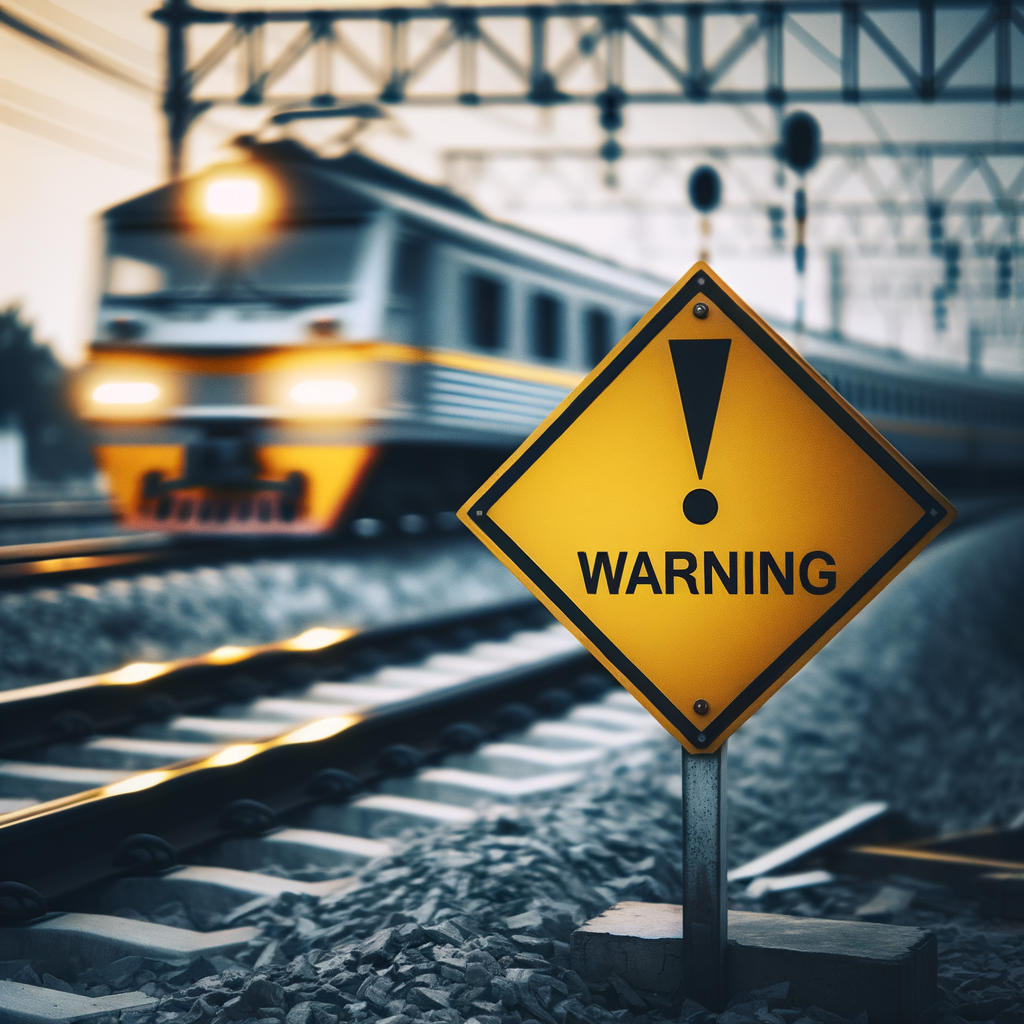
There\'s a dangerous game whispered about in hushed tones, a reckless dare that has claimed far too many young lives: \'Il Gioco del Pollo,\' or \'The Game of Chicken.\' While the name might sound like something from a classic movie, its real-world consequences are anything but cinematic. As the author of this site, I\'ve spent a significant amount of time researching and reflecting on the devastating impact of such behaviors, and I feel a profound responsibility to shed light on this issue. It\'s a tragic reminder of how quickly youthful bravado can turn into irreversible tragedy on railway tracks, a place never meant for games.
\'Il Gioco del Pollo\': Defining a Deadly Game
\'Il Gioco del Pollo\' is a term that, tragically, has become synonymous with a specific and incredibly dangerous behavior: young people deliberately placing themselves in the path of oncoming trains, only to move away at the last possible second. It\'s a horrifying spectacle driven by a cocktail of adolescent impulses and often a severe misunderstanding of the realities of railway operations. The concept itself is chillingly simple yet utterly reckless, designed to test courage against the ultimate immovable force. The immediate and severe risks are obvious to any rational adult, but to a developing mind under certain pressures, the appeal can tragically outweigh the peril.
The Allure of Risk: Why Young People Engage
From my perspective, understanding why young people engage in such a high-stakes game requires delving into the complex psychology of adolescence. The teenage years are a crucible of identity formation, where peer pressure and the desire for recognition can be incredibly powerful forces. It’s often about proving something – whether it\'s bravery, loyalty to a group, or simply a misguided sense of invincibility. Adolescents are still developing the frontal lobe, the part of the brain responsible for impulse control and risk assessment. This developmental stage, coupled with a natural human curiosity and thrill-seeking tendencies, can lead to a dangerous underestimation of danger, particularly when amplified by social dynamics. The fleeting rush of adrenaline can feel intoxicating, masking the terrifying reality of the situation.
The Harsh Realities: What Happens When the Game Goes Wrong
Unfortunately, the harsh reality is that this \'game\' goes wrong far more often than people realize. The statistics are grim and speak to a catastrophic failure of judgment, often with fatal outcomes. A miscalculation of mere seconds, a trip, a moment of hesitation, or simply the sheer force and speed of a train can lead to horrific injuries, dismemberment, or instantaneous death. But beyond the physical devastation, the trauma inflicted on survivors – those who were part of the group, witnesses, and especially the train operators – is profound and long-lasting. Families are torn apart by grief, communities are left reeling, and the psychological scars can endure for decades, serving as a constant, painful reminder of a moment of fatal folly. There is no winning in \'Il Gioco del Pollo\'; only profound loss.
Beyond the Tracks: The Devastating Impact on Individuals and Communities
The ripple effect of railway incidents caused by dangerous games like \'Il Gioco del Pollo\' extends far beyond the immediate scene. As someone deeply invested in community well-being, I\'ve seen firsthand how these tragedies echo through the lives of countless individuals. Train operators, many of whom are simply trying to do their job, are left with indelible psychological trauma, forced to live with the memory of an unavoidable collision. First responders, who arrive to scenes of unimaginable devastation, also carry the emotional burden of what they witness. Witnesses, particularly those who were friends or family members, can develop PTSD, anxiety, and guilt. And for the affected families and communities, the loss of a young life, particularly one taken so senselessly, leaves an unfillable void and a collective sense of grief and helplessness. It\'s a devastating chain reaction that leaves no one untouched.
The Unseen Dangers: Why Railway Tracks Are Never a Playground
It’s absolutely crucial for everyone, especially young people, to understand that railway tracks are not, and can never be, a playground. They are operational pathways for heavy machinery moving at incredible speeds, and the dangers extend far beyond just the approaching train. The tracks themselves present trip hazards, electrical risks from overhead lines or third rails, and loose ballast. The environment is inherently unpredictable; a train can appear silently and quickly from either direction, and there are often no safe places to take cover. Too often, the perception of danger is severely underestimated, leading to the false belief that one can always react in time. This is a deadly misconception that we must actively work to dispel.
Understanding Train Speeds and Braking Distances
One of the most dangerous misconceptions fueling \'Il Gioco del Pollo\' is the belief that a train can stop quickly or that you have ample time to get out of its way. From the perspective of someone standing near the tracks, an approaching train can seem to move relatively slowly, but this is a dangerous optical illusion. Modern trains are incredibly fast, and their sheer weight means they require immense distances to come to a complete stop – often more than a mile, even with emergency braking applied. Imagine standing on a football field; a train might need several football fields to stop once the brakes are engaged. By the time a train operator sees someone on the tracks and initiates braking, it\'s almost always too late to avoid an impact. There is simply no humanly possible way to react quickly enough to a high-speed train, no matter how quick you think you are.
The Silent Approach: Limitations of Warning Systems
Another critical, often overlooked danger is how quiet trains can be, particularly modern electric or high-speed models. Unlike the loud, chugging steam engines of old, today\'s trains glide along tracks with surprising stealth. Ambient noise from traffic, headphones, or even lively conversations with friends can easily drown out the sound of an approaching train until it\'s dangerously close. While horns and bells are used, they are not always heard, especially in certain environments or if someone is distracted. Furthermore, these warning systems are designed to alert those at crossings, not to act as a personal warning for trespassers who are not expected to be on the tracks. Relying on hearing a train before seeing it is a gamble with incredibly high stakes, and it\'s a gamble you will almost certainly lose.

Proactive Prevention: Educating, Engaging, and Empowering for Safety
Preventing \'Il Gioco del Pollo\' and other dangerous railway behaviors requires a multi-faceted approach, one that focuses on education, engagement, and empowerment. As an advocate for safety, I firmly believe that knowledge is our best defense. Comprehensive educational programs in schools, delivered by railway safety professionals, can equip young people with a realistic understanding of the dangers. Public awareness campaigns, using relatable messaging and impactful storytelling, can reach a broader audience, fostering a culture of safety. Moreover, providing accessible resources for young people struggling with peer pressure or seeking thrills in safe ways is paramount. It’s about giving them alternatives and a strong support system. For instance, initiatives focused on railway safety and offering practical assistance and information can be found at il gioco del pollo, where various organizations offer resources and support to combat dangerous behaviors on and around railway lines.
Leveraging Technology and Infrastructure for Enhanced Safety
While education is vital, we can\'t solely rely on it. Technology and infrastructure play a critical role in creating safer railway environments. Surveillance cameras, motion sensors, and even drone monitoring can deter trespassing and provide early warnings. Infrastructure improvements, such as safer pedestrian crossings with clear signage and robust fencing along known hot spots, are essential physical barriers. These measures aren\'t about punishing individuals but about making it physically harder and riskier to engage in dangerous behaviors, acting as a crucial line of defense when judgment fails or risks are ignored. It\'s about designing safety into the environment itself.
A Shared Responsibility: The Role of Parents, Schools, and Public Initiatives
Ultimately, tackling the \'Fatal Folly of Il Gioco del Pollo\' is a shared responsibility. It requires a collective effort from every segment of society. As parents, we must engage in open, honest conversations with our children about the dangers of railway tracks, emphasizing the finality of mistakes made there. Schools have a vital role in integrating railway safety into their curriculum, utilizing resources from railway authorities. Local authorities and community organizations can spearhead public awareness campaigns, organize safety workshops, and work with railway companies to identify and secure vulnerable areas. By working together, we can instill safe behaviors, facilitate open communication about risks, and create a safer environment for everyone near railway lines, ensuring that no more lives are tragically lost to this deadly game.